
Don’t LS my Hemi
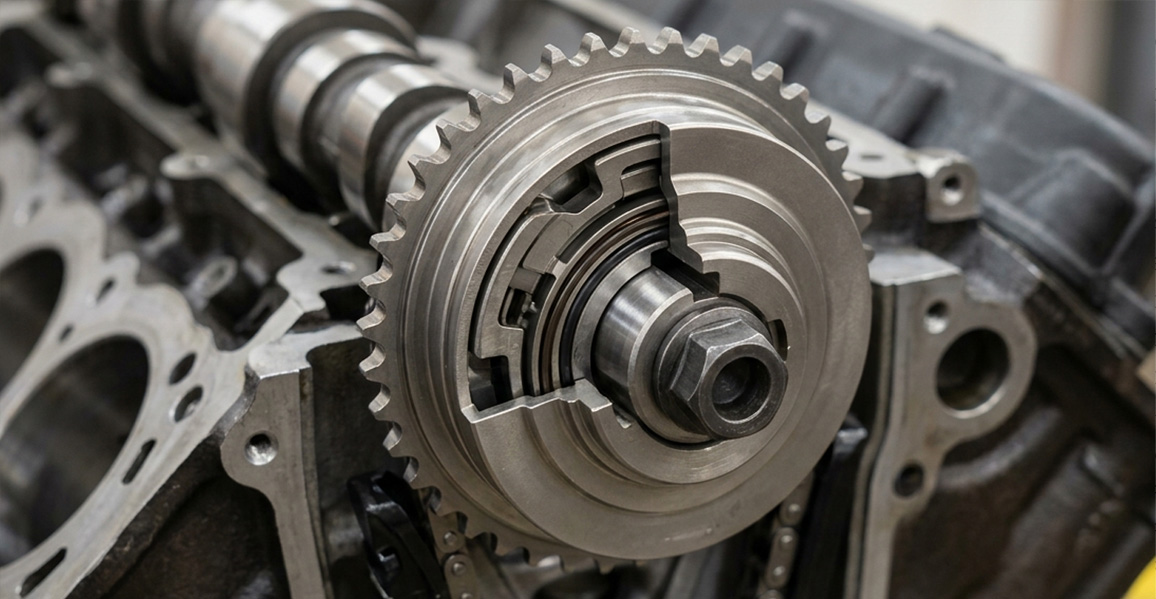
Why a Gen 3 HEMI Cam Connection Is Superior to a 3-Bolt LS Cam Connection
When building a serious Gen 3 HEMI engine, every component in the timing system contributes to power, durability, and reliability. Whether you’re installing a HEMI VVT delete sprocket set, upgrading your camshaft, or assembling a high-horsepower race engine, choosing the right HEMI timing components can make the difference between a reliable combination and an expensive failure.
Often looked at as a disadvantage by those not well versed in the engineering principles, the single bolt Gen 3 Hemi has a nice advantage over the 3 bolt LS when it comes to camshaft drive arrangement.
Unlike the traditional GM LS engine that relies on three small bolts to secure the cam sprocket, the HEMI uses a single, larger bolted connection to transfer torque from the timing sprocket to the camshaft. While both systems can perform well in factory applications, the HEMI connection follows a more robust engineering philosophy that becomes increasingly important as horsepower, valve spring pressure, and engine speed increase.
Let’s look at why.
The Purpose of a Gen 3 HEMI Cam Sprocket
The Gen 3 HEMI cam sprocket has one critical job: accurately transfer rotational torque from the timing chain to the camshaft while maintaining precise valve timing.
Every rotation of the crankshaft creates fluctuating loads on the timing system. As each valve spring compresses and releases, the camshaft experiences rapid torque spikes that become even more severe with:
- Larger aftermarket camshafts
- Higher valve spring pressures
- Superchargers
- Turbochargers
- Nitrous oxide
- High RPM racing
- Trans brake launches
- RPM limiters
Every one of these upgrades increases the demand placed on your HEMI timing components.
The question is simple:
How should this torque be transferred?
The Engineering Difference
Gen 3 HEMI: A Single Bolt + Pinned load transfer + (optional drive dowel pins)
The modern Gen 3 HEMI uses a locating pin that positively locates the cam sprocket to the camshaft with a large center bolt that simply clamps the sprocket against the camshaft face. The aftermarket has increased the clamping load on this connection over 40% higher than OEM.
This means the torque path is:
Timing Chain → Gen 3 HEMI Cam Sprocket → Camshaft
The bolt’s responsibility is preload.
The pin’s responsibility is positive location.
If the user determines the application would benefit from pins to transmit torque, there is a engineered solution for that from Smith Innovation.
Each component performs the task it was specifically engineered to do.
LS Engines: Three Bolts Transfer the Load
The traditional LS platform secures its cam sprocket using three small bolts equally spaced around the camshaft centerline.
Under ideal conditions, bolt preload creates sufficient friction between the sprocket and camshaft to transfer torque.
In theory, the bolts should never carry shear loads.
However, racing engines rarely operate under ideal conditions.
Repeated heat cycles, vibration, aggressive camshafts, higher spring pressures, and elevated RPM can reduce clamping force over time.
When friction between the mating surfaces decreases, the bolts begin resisting rotational movement.
Once that happens, the bolts become shear members.
That is where engineering concerns begin.
Why Bolts Should Never Be Used as Shear Items
One of the most fundamental principles in mechanical engineering is that threaded fasteners are designed to create clamp load—not to transmit rotational torque.
A properly torqued fastener stretches slightly, creating tremendous clamping force between two surfaces.
That clamping force generates friction, and the friction carries the load.
If the joint begins to move, the bolt shank starts absorbing side loads it was never intended to handle.
This introduces:
- Bending stress
- Fatigue loading
- Stress concentrations at the first thread
- Fretting wear
- Bolt loosening
- Potential fastener failure
Bolts perform exceptionally well in tension.
They perform significantly worse under repeated cyclic shear loading.
That is why engineers use dowel pins, keys, splines, and other positive-drive features whenever rotational torque must be transferred reliably.
Why a Camshaft Dowel Pin Is Superior
A hardened camshaft dowel pin is specifically engineered for shear loading.
Unlike threaded fasteners, it features:
- Full diameter load carrying capacity
- No thread stress risers
- Precision alignment
- Positive torque transfer
- Repeatable cam timing during installation
The result is a true mechanical drive rather than one relying entirely on friction.
Even if clamp load changes slightly over years of racing or repeated engine service, the torque path remains positively engaged.
Why This Matters During a HEMI VVT Delete
One of the most common modifications on performance Gen 3 HEMI engines is a HEMI VVT delete.
Removing the factory VVT phaser replaces a complex moving assembly with a fixed camshaft connection designed for improved reliability and consistent cam timing.
However, not all VVT delete systems are engineered the same.
A properly designed pinned Gen 3 HEMI cam sprocket maintains the factory engineering principle of separating clamping force from torque transmission.
This becomes especially important on engines producing substantial horsepower where timing accuracy is critical.
High-Performance HEMI Engine Parts Should Follow Sound Engineering
Every component in a racing engine should be designed around its intended function.
A retaining bolt should clamp.
A dowel pin should locate and transfer torque.
When these responsibilities become combined into a single fastener, reliability depends entirely on maintaining perfect clamp load under every operating condition.
By using a pinned camshaft connection, the Gen 3 HEMI follows proven mechanical engineering principles found throughout industrial machinery, aerospace assemblies, and professional motorsports.
Precision Means Consistency
Another major benefit of a pinned camshaft connection is repeatability.
Every time the cam sprocket is installed, the dowel pin indexes the sprocket into the exact same position.
This provides:
- Consistent cam timing
- Easier engine servicing
- Reduced installation error
- Greater long-term reliability
For professional engine builders, repeatability is every bit as valuable as outright strength.
Why the Smith Innovation Phaser Delete Design allows for pinned HEMI Timing Components
At Smith Innovation, we engineer high-performance HEMI engine parts with one philosophy in mind:
Every component should perform the job it was designed to do.
Our Gen 3 HEMI VVT delete cam sprocket systems is designed around proven mechanical engineering principles—not simply manufacturing convenience. While respecting the original design of the single bolt system we added the ability to add dual pins for positive torque transfer through a high value cam pinning fixture kit.
By combining precision machining, positive camshaft indexing, and robust torque transfer, our HEMI timing components deliver the consistency and durability demanded by today’s naturally aspirated, supercharged, turbocharged, and nitrous-powered Gen 3 HEMI engines.
Whether you’re building a 600-horsepower street car or a 2,500+ horsepower drag racing combination, your timing system should never be the weak link.
A pinned camshaft connection provides the confidence that your cam timing remains exactly where it belongs—run after run, season after season.
Conclusion
The debate between a pinned Gen 3 HEMI cam sprocket and a traditional three-bolt LS connection isn’t about brand loyalty—it’s about engineering and the ability to pick the camshaft grind that works for you. You do not need to be held back and forced to choose the only grinds only offered with 3 bolt attachment.
Bolts are designed to generate clamp load.
A camshaft dowel pin is designed to transmit torque.
Separating these functions creates a stronger, more repeatable, and more reliable connection, particularly in high-performance applications.
When selecting HEMI timing components or planning your next HEMI VVT delete, choose components that follow sound mechanical principles rather than asking threaded fasteners to perform jobs they were never intended to do.
That’s the difference thoughtful engineering makes.

