
Do I need to pin the camshaft on a Gen 3 HEMI, and how is the pinning kit installed?
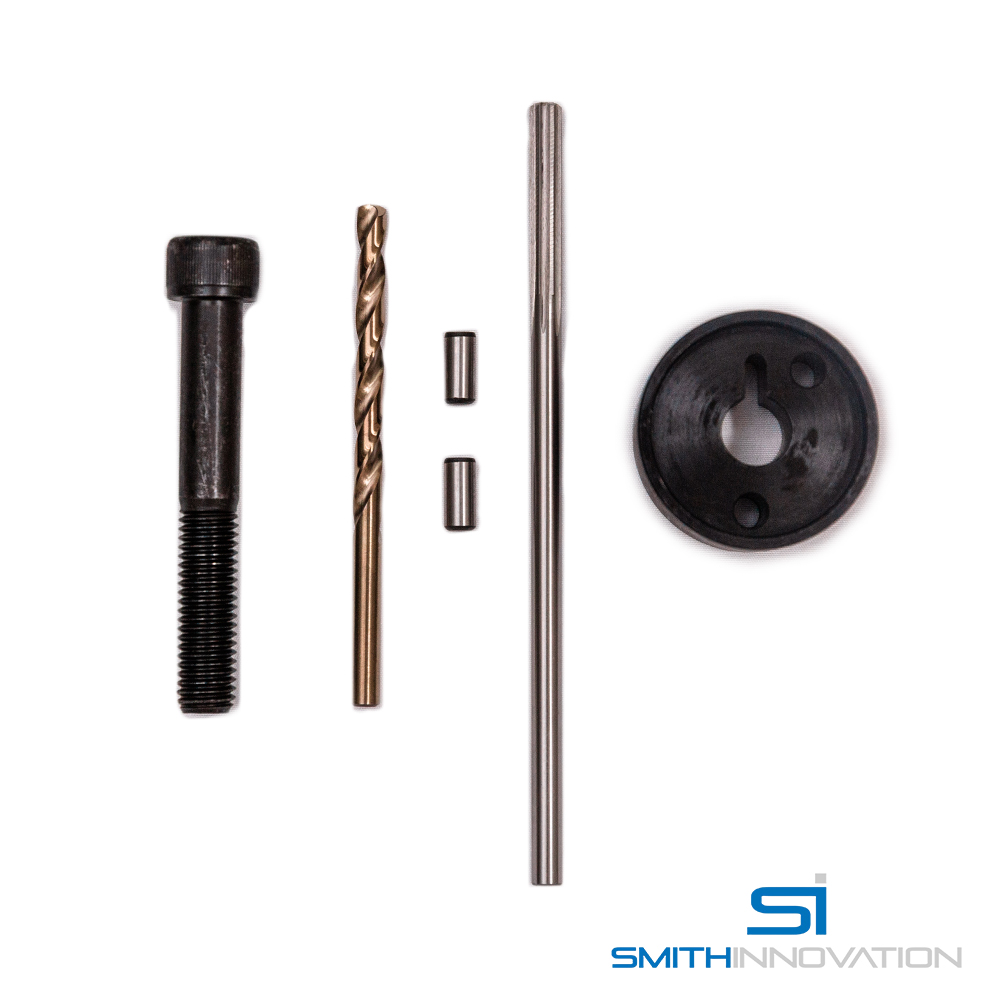
Short answer: Pinning is optional, and our install documents leave it to the builder and recommend it for shock loads such as transbrake use, 2-step, burnouts, big RPM shift drops, backfires and RPM limiters. Our DIY fixture kit drills, reams and pins the camshaft with a drill motor, with the cam out of the engine.
Key points
- The Gen 3 HEMI cam drive is friction driven. Our Timing Set Installation document puts it plainly: the system "relies on friction to drive the camshaft." Pinning adds dowel pins between the camshaft and the sprocket or gear on its nose, as insurance for that friction joint.
- Our Gen3 Hemi Camshaft Pinning Kit is a DIY fixture kit. Per the Camshaft Pinning Kit v1 instructions it ships with a drill fixture, a socket head screw, two dowel pins, a cobalt drill bit and a reamer. You supply the drill motor.
- The camshaft has to come out of the engine to do it. The instructions say so in the first line of the prep section.
The reason this question comes up at all is that the joint between a camshaft and the thing driving it is not obvious. A bolt or stud clamps the sprocket to the face of the cam, and a locating pin sets where it sits. Those two jobs get confused, and the confusion ends with somebody asking whether the cam should be pinned. Here is the answer from our own install documents, and what the kit actually is.
Do I need to pin the camshaft on a Gen 3 HEMI?
It is optional. Our Gear Drive Installation document says pinning is "optional and to be determined by the installer/builder," and that is why our gear drive top gear comes pin ready "if desired" rather than pinned from the factory.
Our pinning instructions include a recommendation, and they label it as our opinion rather than explicit direction. The short version: we have had solid results and very few sheared cam locating pins simply from torquing the cam bolt or nut to the proper value. Where the clamp cannot hold, it is shock loading that does it, and the document lists the situations:
- Transbrake use
- 2-step
- Spin and hook, think burnouts
- Big RPM shift drops
- Backfires
- RPM limiters
That is where we recommend the extra insurance of pinning. If your build sees those loads, pin it. If it does not, correct torque on clean, dry parts is what holds the cam.
The failure being insured against is a sprocket slipping on the camshaft and a locating pin shearing. That is the same failure our billet sprocket hardware is designed around: that kit's camshaft attaching hardware yields 20% more clamping force to the camshaft, to help prevent slipping and sheared locating pins.
For the longer version of why the timing system deserves this much attention on a Gen 3 HEMI build, read Don't LS my Hemi.
What does pinning actually do?
The dowel pin is pressed into a hole drilled and reamed in the nose of the camshaft, and it is left standing proud so it engages the matching pin ready hole in our sprocket or gear. With the pin in place, the two cannot rotate relative to each other even if the clamp is ever asked more than it can hold.
The pin does not replace the clamp. Our install documents describe the cam to sprocket joint as a friction driven interface, and pinning as added insurance for it. Doing one does not excuse skipping the other, which is why our top sprocket and gear ship with our own cam stud kit and an SKF roller thrust bearing rather than leaving the hardware to chance.
What is in the camshaft pinning kit?
Here is the "What's in the box?" list from the Camshaft Pinning Kit v1 instructions.
| In the kit | What it is for |
|---|---|
| Drill fixture (1) | Fits over the nose of the camshaft and locates the holes |
| Socket head screw M12 x 1.75 x 80mm (1) | Secures the fixture to the camshaft |
| Dowel pins (2) | The pins that go in |
| 15/64 inch cobalt drill bit (1) | Drills the hole |
| Reamer (1) | Finishes the hole to size for the pin |
You supply the drill motor. The product page puts the point of it plainly: the kit allows the use of simple hand tools paired with a drill to pin your own camshaft to the upper sprocket or gear, and the sprocket or gear comes pin ready with matching holes, which means you are not paying a machine shop for the same result.
Which sprockets and gears are pin ready?
Ours. The pinning instructions say the fixture "has been specifically designed to work with the billet chain sprocket or billet gear from our world class timing sets," and the product page states a direct fit to Smith Innovation pin ready chain sprockets and the gear drive.
| Part | Pin ready | Stated fitment |
|---|---|---|
| High Performance Timing Set for VVT Style G3 Hemis | Yes, the pinning kit page lists our chain sprockets as pin ready | All 2009 and newer 5.7, 6.2 and 6.4 Gen 3 HEMI |
| Gen3 Hemi Gear Drive Kit | Yes, the top gear comes pin ready | All 2009 and newer 5.7, 6.2 and 6.4 Gen 3 HEMI |
| Gen3 Hemi Camshaft Pinning Kit | The fixture itself | Direct fit to Smith Innovation pin ready sprockets and the gear drive |
If you are running somebody else's sprocket or a factory phaser, call us before you order the fixture. The kit is designed around our billet sprocket and gear, and we would rather tell you that on the phone than have you find out on the bench. The number is (972) 435-4209.
How is the pinning kit installed?
The camshaft comes out of the engine first. Our instructions are direct about it: "The camshaft must be removed from the engine to perform this task." Drilling makes metal shavings, and they will get lodged in the original VVT oil passages of the camshaft, so plan on cleaning. Secure the cam well, because it will want to spin while you drill.
The short version of the sequence, from the document:
- Place the drill fixture over the nose of the camshaft, aligning the cam locating pin with the slotted hole in the fixture, and secure it with the supplied socket head screw.
- Mark the drill bit and the reamer for depth, so you can see the depth from outside the fixture.
- Drill the camshaft through fixture hole P1 with a drill motor to the mark, then clear the hole with compressed air.
- Ream the hole to the mark, then blow out every hole and make certain they are clear of shavings and debris.
- Tap the dowel pin into the reamed hole with a brass hammer or brass drift until it protrudes the amount the document specifies.
- Optional: repeat at fixture hole P2 for a second pin.
You can pin one location or both. If you pin only one, the document recommends the P1 location.
The full instructions, including the depth marks and pin protrusion, are in the "Camshaft Pinning Kit v1" document on our Technical page. We are not going to retype a depth into a blog post where it can drift out of date. Open the document, read it before you start, and keep it in front of you.
Since the cam has to be out, decide about pinning before the camshaft goes into the engine. Our gear drive instructions make the same point.
Does pinning replace good cam hardware?
No. Pinning is insurance on top of the clamp load, not a substitute for it. If the hardware holding your sprocket to the cam is tired, old, or was never right, fix that first and then decide about a pin.
Our Improved Cam Hardware Kit exists for exactly that: it is our exclusive cam stud kit for our billet VVT eliminator sprocket or gear, usable as an upgrade for earlier Smith Innovation top sprocket kits that shipped with bolts, or as a replacement for your cam studs. It will not work with an OEM phaser or another brand's parts, so it is only the answer if you are running our sprocket or gear.
FAQ
Is pinning the camshaft required on a Gen 3 HEMI?
No. Our gear drive instructions call it optional and to be determined by the installer or builder. Our pinning instructions recommend it for shock loads such as transbrake use, 2-step, burnouts, big RPM shift drops, backfires and RPM limiters.
Does the camshaft have to come out to pin it?
Yes. The Camshaft Pinning Kit v1 instructions say the camshaft must be removed from the engine to perform this task, and that drilling leaves shavings in the cam's original VVT oil passages that have to be cleaned out.
What does "pin ready" mean?
It means our sprocket or gear already has the matching holes for the dowel pins, machined in when the part was made. The fixture locates off the cam locating pin, so the holes you drill in the cam line up with the holes already in our part.
Do I need a machine shop to pin a camshaft?
Not with this kit. The fixture, the screw, the drill bit, the reamer and the dowel pins are the kit, you supply a drill motor, and the fixture does the locating. That is the whole reason the kit exists.
Will the pinning kit work with an OEM phaser or another brand's sprocket?
The instructions say the fixture is specifically designed to work with the billet chain sprocket or billet gear from our timing sets, so that is what we will stand behind. If you are running something else on the nose of the cam, call us and describe it rather than assuming it will work.
Where are the install instructions?
On our Technical page, in the document titled "Camshaft Pinning Kit v1". The same page carries the gear drive installation, timing set installation and billet timing cover guides.
Are these parts street legal?
Our parts are intended for off road use only, or for use on vehicles that are not operated on public highways. Emissions compliance where you live is on you and on the installer, so check first if the vehicle sees the street.
Ask before you order
If you are not sure whether your build needs the cam pinned, tell us the engine, the camshaft and what the car does, and we will give you a straight answer, including when the answer is that you do not need it. Call (972) 435-4209, email smithinnovation.bs@gmail.com, or use the form on our contact page. The pinning kit is on its product page, and the install document is on the Technical page.

